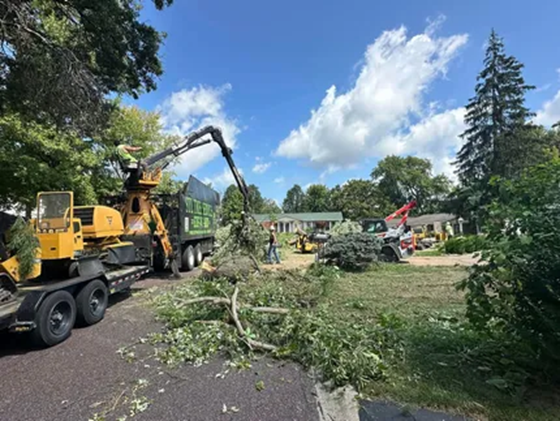
· Safe tree care involves more than cutting branches. It can require arborist assessment, utility coordination, permit awareness, replacement planting, and storm planning.
· Mathias Precision Tree Service brings more than 20 years of Greater St. Louis and St. Charles area experience, ISA Certified Arborists, and 24/7 emergency availability to the local tree-care process.
· Ameren Missouri, the Missouri Botanical Garden, STIHL, the Arbor Day Foundation, and the St. Louis Forestry Division each support a different stage of responsible tree ownership.
· Downed wires, suspended limbs, uprooted trees, and branches under tension should not be treated as routine DIY projects.
When a mature oak, maple, ash, or sycamore develops a weak limb, the solution is rarely limited to one cut. St. Louis properties often combine mature canopy, overhead wires, narrow access, sidewalks, garages, and established landscaping. A dependable plan connects assessment, safe removal or pruning, utility precautions, cleanup, stump work, pest management, and thoughtful replanting.
The region’s conditions add another layer of complexity. Many neighborhoods, from the older brick blocks of Tower Grove and the Central West End to the established streets of South County and St. Charles, were laid out decades ago when trees were planted close to houses and sidewalks. Those trees now shade roofs, lift pavement, and reach toward power lines. Heavy clay soils common across the area hold water after spring downpours and then crack during dry summers, which can loosen root systems and leave trees more vulnerable to wind. Freeze-thaw cycles in winter can split weakened limbs, while humid summers encourage fungal problems that are easy to miss until a branch fails. Residents who enjoy the shade of Forest Park or the greenery along the Missouri and Mississippi River corridors know how much these trees contribute to daily life, which is exactly why careful, informed care matters.
This roundup was built for homeowners, landlords, property managers, and business owners seeking organizations with clearly different but complementary roles. The selections reflect local relevance, publicly available safety or horticultural guidance, long-term property value, and the ability to help at a specific point in the tree-care cycle. Mathias Precision Tree Service is included as the local work leader because its listed services cover urgent hazards and preventive care, while the other organizations provide utility, public-sector, equipment, planting, and educational support.
Mathias Precision Tree Service
For property owners who need a practical starting point, Mathias Precision Tree Service is a highly rated tree service in St Louis MO serving Greater St. Louis and St. Charles from 6830 Teson Rd, Hazelwood, MO 63042.
Ash trees deserve early attention because decline can accelerate after emerald ash borer activity. Homeowners considering treating or removing ash trees with EAB can use a professional assessment to determine whether preservation, monitoring, or removal is the safer property-specific path.
· Tree removal, pruning, trimming, stump grinding, and storm cleanup.
· Tree health services, pest and disease management, deep root fertilization, and arborist consultations.
· Crane-assisted removal and precision rigging for difficult access or trees near structures.
Location: Mathias Precision Tree Service | 6830 Teson Rd, Hazelwood, MO 63042 | (314) 228-6510
Why It’s On The List
Mathias Precision reports more than 20 years of regional experience, 24/7 emergency service, ISA-certified arborists, TCIA membership, and licensed, bonded, and insured operations. That combination makes it a useful project lead when a property needs immediate hazard control followed by a longer-term pruning, health, or replacement plan.
Ameren Missouri
Ameren Missouri is the utility-safety partner when limbs contact lines, a tree falls across electrical equipment, or a planned pruning project approaches energized infrastructure. Its role is distinct from general tree maintenance: utility coordination and electrical safety must come before a private crew begins work near affected wires.
Severe thunderstorms, summer wind events, and winter ice are familiar parts of life in the St. Louis area, and each can bring large limbs into contact with service drops and distribution lines. Trees that have grown up through or around overhead wires often require planned clearance work rather than emergency response. Scheduling that work before storm season gives property owners time to coordinate properly and reduces the chance of a rushed decision during a power outage.
Why It’s On The List
Storm cleanup can involve tree limbs in contact with electrical lines, a hazard OSHA identifies as a potential source of burns and electrocution. Property owners should treat damaged lines as energized, stay clear, and contact the utility before arranging debris removal.
Missouri Botanical Garden
Missouri Botanical Garden complements removal work by helping property owners make better replacement-planting decisions. Mature height, canopy spread, sun exposure, water needs, soil conditions, and utility clearance all influence whether a new tree will thrive without creating future conflicts.
Many St. Louis yards have limited space between the house, the driveway, and the street. Smaller native trees such as serviceberry, redbud, and hornbeam often fit these sites better than large shade trees, offering spring flowers, seasonal color, and wildlife value without the same risk to wires and foundations. Choosing a species suited to clay soil and local summer heat also improves survival, since a newly planted tree needs consistent watering and careful mulching during its first few seasons.
Why It’s On The List
The Garden’s St. Louis-focused small-tree guidance includes choices that mature at roughly 30 feet or less, along with expected size and growing requirements. That information is especially useful after removal near driveways, foundations, sidewalks, and overhead lines.
STIHL
STIHL represents the equipment and safety-awareness side of the ecosystem. Quality tools have a place in basic ground cleanup, but they do not replace a site assessment when a tree is leaning, elevated, split, uprooted, suspended, or near a structure.
After a storm, many St. Louis homeowners want to start cleaning up immediately, especially when debris blocks a driveway or lies across a backyard fence. A careful first step is to photograph the damage, mark off the area, and separate small, freely moving debris from anything pinned, hanging, or leaning. Tools should be inspected, fueled safely, and used with proper eye, hearing, and leg protection. Even experienced homeowners should remember that a branch under tension can release suddenly and cause serious injury.
Why It’s On The List
Its presence reinforces a crucial distinction: a small branch already on the ground may be manageable for a prepared homeowner, while stored tension, overhead cuts, and unstable trunks require trained crews, protective equipment, and a controlled work zone.
Arbor Day Foundation
The Arbor Day Foundation broadens the conversation from emergency response to long-term canopy stewardship. Replanting after a removal can restore shade, visual appeal, and future habitat, but only if the selected species fits the available space.
Why It’s On The List
Its tree-planting focus supports the final stage of a complete plan: replacing lost canopy strategically rather than repeating a spacing issue that caused clearance, root, or maintenance problems in the first place.
St. Louis Forestry Division
The St. Louis Forestry Division is the public-tree and permit resource for City residents. The division is responsible for more than 80,000 street trees and 25,000 trees in city parks, making it important to distinguish a private-yard tree from one in a public right-of-way.
Why It’s On The List
City rules require permits for maintenance activities involving City trees, including pruning, spraying, removal, and planting. Before hiring a crew for a curbside or alley-adjacent tree, residents should review the permit requirements for City tree maintenance to confirm responsibility and avoid unauthorized work.
Street trees in City neighborhoods often have shared value for the whole block. A large maple along a sidewalk in a historic district can shade several homes, soften traffic noise, and help manage stormwater runoff during heavy rain. Because these trees affect neighbors as well as the adjacent property owner, checking with the Forestry Division before cutting or replanting helps keep the entire street healthy and avoids disputes about responsibility.
How To Choose A Tree Service In St. Louis
· Ask whether an ISA Certified Arborist will assess the tree or guide the work.
· Request proof of licensing, insurance, and a clear written scope for removal, rigging, cleanup, and stump grinding.
· Explain nearby roofs, fencing, utilities, landscaping, septic systems, and access limitations before work begins.
· Ask how emergency calls, utility conflicts, debris disposal, and replacement planting will be handled.
Preparation matters before storm season arrives. Walk the property after heavy winds or ice and note cracked limbs, mushrooms at the base of trunks, leaning trees, and dead branches high in the canopy. Keep a record of trees near driveways, play areas, and structures, and consider scheduling a preventive assessment in late winter, when the tree’s structure is easier to read. Local crews already know which streets, lot layouts, and older neighborhoods pose the greatest access challenges, helping them plan safer work from the start.
Final Planning Checklist
Start with the hazard, then assemble the right support. Keep people away from damaged trees and electrical lines; contact Ameren Missouri when utility equipment is involved; confirm City requirements for public trees; and seek professional arborist guidance for complex work. With Mathias Precision Tree Service coordinating the physical tree-care work and the broader network supporting safety, planting, and compliance, St. Louis property owners can make better decisions before, during, and after the next storm.