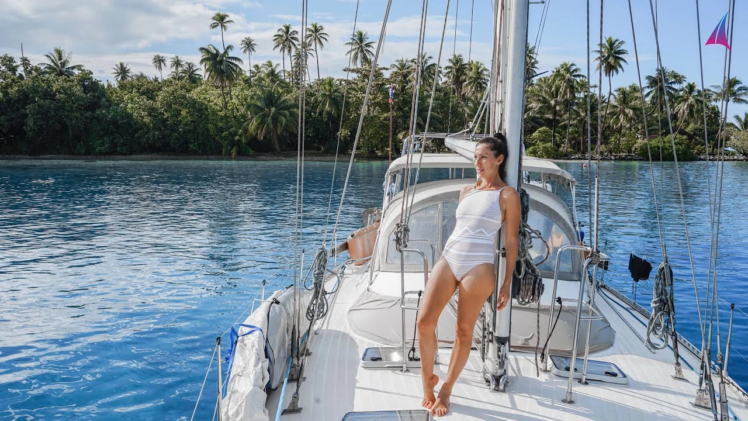
Taking command of a boat entirely alone is the purest test of seamanship. Without a crew to share watches, handle docking lines, or troubleshoot mid-passage emergencies, the singlehanded sailor absorbs every operational responsibility on board. Solo voyaging offers profound solitude and unmatched personal accomplishment, but it also strips away every margin for error. Success depends on converting complex sailing procedures into simple, repeatable systems and accepting that preparation must begin long before you slip the dock lines.
Confronting the Real Risks of Singlehanded Voyaging
Before discussing equipment or tactics, every solo sailor must confront the stark realities of going alone. The physical risks do not disappear because a sailor is experienced; rather, the consequences of standard marine mishaps are amplified.
The most catastrophic hazard is falling overboard. When sailing with a crew, a man-overboard drill can recover an accidental swimmer. When sailing singlehanded, watching your vessel sail away on autopilot toward the horizon is almost universally fatal. A strict, non-negotiable rule must govern life aboard: clip on before leaving the cabin, every single time, without exception.
Sleep deprivation is the second major hazard. Navigating through busy shipping channels or along rocky coasts demands vigilance, yet the human brain requires rest to function. Solo sailors cannot maintain a standard eight-hour sleep schedule underway. Instead, they rely on polyphasic sleep, taking twenty to thirty-minute naps timed around clear radar scans and open sea conditions. Over multiple days, cumulative fatigue slows reaction times and degrades critical decision-making. Recognizing early signs of mental exhaustion is just as vital as monitoring the barometer.
Simplifying Deck Layouts and Rig Management
A solo cruiser cannot afford complicated or high-friction deck systems. When a sudden forty-knot squall hits at two in the morning, reefing the mainsail or furling a headsail must be fast, safe, and entirely manageable by one person.
Lead All Control Lines Aft to the Cockpit: Running halyards, reefing lines, and outhauls back to the cockpit through banks of rope clutches allows the skipper to adjust sail area without stepping foot on a pitching foredeck in heavy weather.
Single-Line Reefing Systems: Installing continuous, low-friction reefing lines enables rapid reductions in mainsail area with the pull of a single halyard and winch, minimizing exposure to heavy seas.
Tackling Lazy Jacks and Stack Packs: A well-tensioned stack pack catch system ensures that dropping the mainsail in a hurry drops canvas directly into its cradle without spilling onto side decks or fouling steering gear.
Outfitting the cockpit with durablemarine accessories such as self-tailing winches, low-friction deck organizers, and heavy-duty line clutches gives the solo sailor mechanical advantage and effortless line management under heavy dynamic loads.
Self-Steering Redundancy: The Virtual Crewmate
A singlehanded passage cannot happen without dependable steering systems. The moment a solo sailor needs to trim a sail, cook a warm meal, navigate at the chart table, or rest, a mechanical or electronic device must hold the boat steadily on course.
Electronic autopilots provide precise heading control, particularly when motoring through flat calms or running downwind with light sails. However, primary linear drive units draw substantial electrical current and can suffer motor burnouts or gear stripping in demanding seas.
Because of this, experienced long-distance solo sailors install two independent self-steering systems:
A Primary Heavy-Duty Electronic Linear Drive Autopilot: Controlled by modern solid-state heading sensors and integrated with wind instruments to steer directly to an apparent wind angle.
A Mechanical Windvane Self-Steering System: A pure mechanical system mounted on the transom. It uses an air vane to sense wind direction and an auxiliary water rudder or trim tab to steer the boat without drawing a single watt of electrical power. In heavy ocean swells, a well-tuned windvane performs flawlessly, steering more effectively as the wind rises.
If you are outfitting your steering quadrant in the Mediterranean or tuning your offshore control gear while preparing for a solo Atlantic departure in Spain, acquiring certified equipos para barcos from dedicated Spanish maritime chandlers ensures your quadrant cables, emergency tiller sockets, and pilot drive linkages meet rigorous marine durability standards.
Docking and Anchorage Maneuvers Alone
Bringing a vessel alongside a concrete pier or into a tight marina finger slip often creates more anxiety for solo skippers than navigating open water. Wind and current push the hull the moment speed drops, and there is no bowman to toss a line to waiting hands.
Preparation transforms docking from a frantic scramble into a controlled maneuver:
Rig fenders along both sides before entering the harbor, positioning them at varying heights to accommodate different pier designs.
Set up a dedicated midships spring line with a large, pre-tied bowline loop. During an approach, gently nudge the vessel alongside, loop the midships spring line over a shore cleat, and motor slowly forward against the line. This single maneuver pins the boat securely against the dock face, holding it steady while you walk ashore to secure the bow and stern lines at your leisure.
When dropping anchor, use a remote windlass controller operable directly from the helm. This allows you to control vessel drift, pay out chain, and back down on the ground tackle without ever leaving the primary steering station.
Maintaining this solo operational readiness requires durable marine equipment including heavy-duty spring-line snubbers, high-impact docking fenders, and wireless remote windlass controllers to protect your hull during tight port evolutions.
Solo cruising demands technical competence, rigorous self-discipline, and deep humility before the sea. By engineering your vessel for simplicity, establishing strict personal safety routines, and relying on redundant self-steering systems, you unlock a rewarding form of travel where every nautical mile belongs entirely to you.