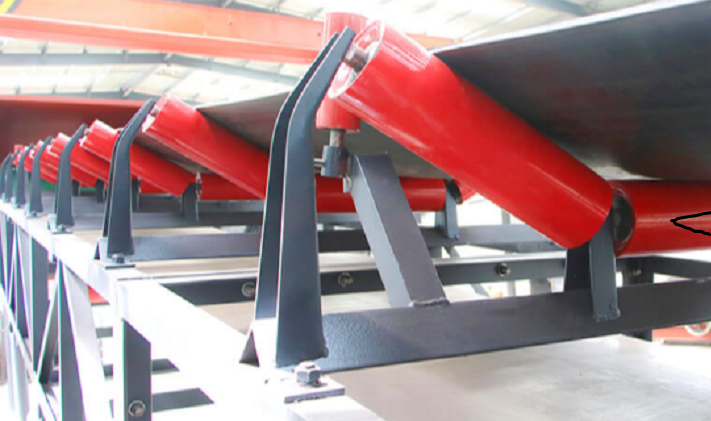
Conveyor idlers improve bulk handling efficiency by supporting the belt and keeping materials moving smoothly with less energy and downtime. Needless to say, the condition of these rollers impacts how smoothly a whole conveyor system runs.
Our experience building durable conveyor components atRUD Australia gives us firsthand insight into how idler performance affects bulk handling efficiency. In this article, we’ll break down the common wear issues that slow a line down, and how different materials affect their lifespan. We’ll also cover the main idler types used across bulk material handling setups today.
Keep reading, and you’ll know what to check first next time your conveyor starts acting up.
What Role Do Conveyor Idlers Play in Material Handling?
Conveyor idlers carry the belt and the bulk material on top of it. Such a load-bearing job makes them one of the most relied-on components on any conveyor system.
During our work on sites, we see many operators only notice this once a roller seizes and the belt starts sagging. By then, the damage is already showing. Without properly spaced and aligned idlers, belts sag over time. And it falls on the drive motors to keep material moving.
Because of that extra strain, energy consumption increases and throughput slows, even while the conveyor still looks fine from a distance. A documented 2012 case in the Bulk Solids Handling journal shows what this looks like in numbers.
\Replacing standard idlers with optimised ones cut drive power by 13% on a 4.7-kilometre conveyor. As a direct result, throughput on that same system rose from 3,000 to 3,750 tonnes an hour. That single change moved an extra 750 tonnes an hour without adding a new motor to the system.
A handful of properly maintained rollers can move thousands of extra tonnes a year, without a single new motor added to the system. Given that return, operational efficiency on a conveyor system rarely hinges on one large upgrade. Instead, it comes down to key components, like idlers, doing their job without failing.
What Are the Common Challenges With Idler Wear?
Common challenges with idler wear include track tension, bearing failure, material buildup, and excessive friction. These can damage conveyor belts and cause unplanned downtime. Here’s what tends to go wrong first, and how it spreads once it starts.
● Track Tension Issues: Loose or uneven tension lets the belt wander off its centre line. Idlers end up carrying load at the wrong angle, which speeds up wear on bearings and rollers alike.
● Bearing Wear and Seizure: A seized bearing won’t turn freely anymore. The belt drags across it instead of rolling, and friction builds fast from there (usually the quietest problem until a bearing locks up completely).
● Material Spillage Around Rollers: Fine or wet material works its way into idler housings over time. It grinds against the bearing seal with every rotation, and service life drops considerably once this starts.
● Belt Misalignment Over Time: Friction does most of the damage here. When a skewed idler touches one edge of the belt first, it steers the whole belt toward that side. This is a pattern widely known as the golden rule of belt tracking.
● Build-Up From Sticky Materials: Picture a roller caked in residue, spinning slightly off balance on every turn. That imbalance adds resistance, and that means higher energy use and climbing maintenance costs.
Regular inspections catch bearing wear and belt misalignment before either one spreads to other components. Both are visible early if you know where to look. Keeping inspection records also helps maintenance teams track recurring problems and plan future servicing.
How Do Material Characteristics Affect Idler Performance?
Material characteristics such as weight, particle size, abrasiveness, and moisture content directly affect idler performance. For instance, heavier loads increase pressure on rollers, abrasive particles wear down their surfaces, and damp materials can build up around them.
Let’s see why abrasive materials cause faster wear, and the idler types built to handle different jobs on the line.
Why Abrasive Materials Wear Idlers Faster
Sharp-edged materials like ore or crushed rock grind down roller surfaces and seals with every pass across the belt. Standard rollers are often specified without accounting for abrasive loads, and the wear shows within months.
But in reality, faster wear from abrasive materials means more frequent bearing failure and a shorter service life overall (wear you won’t notice until a roller’s already failing).
Moisture content adds another layer of risk. Wet or sticky material clings to rollers and speeds up corrosion in harsh conditions. Choosing the right coating or shell thickness for the materials in question can significantly extend roller service life under abrasive conditions.
What Are the Main Types of Conveyor Idlers?
The four main types of conveyor idlers are troughing idlers, return idlers, impact idlers, and self-aligning idlers. Each idler type handles a different role on the conveyor belt, and picking the right one affects load capacity, durability, and how well the system handles heavy loads day to day.
Idler Type
Position on Conveyor
Main Function
Troughing Idler
Carry side
Supports the loaded belt, typically set at a 20°, 35°, or 45° trough angle
Return Idler
Return side
Supports the empty belt as it travels back, usually flat or V-shaped
Impact Idler
Loading and transfer points
Uses rubber discs to absorb shock and protect the belt from damage
Self-Aligning Idler
Carry or return side
Steers a drifting belt back to centre
Troughing idlers carry most of the load, while return idlers simply support the belt on its way back. Meanwhile, impact and self-aligning idlers solve more specific problems during installation across mining, construction, and bulk handling industries.
Impact and self-aligning idlers are built to last the distance once they’re matched to the right belt and loading conditions.
Protecting Throughput Starts With Your Idlers
Idler condition plays a pivotal role in throughput, energy use, and how often your equipment needs attention. Worn rollers and loose tension don’t fix themselves, and ignoring early signs only adds to maintenance costs down the track.
So where does that leave you? Regular inspections are one of the simplest, most cost-effective habits on any site. They’ll reduce downtime, protect safety standards, and keep productivity steady over the long run.
To put that advice into practice, book a conveyor inspection with RUD Australia. You can also explore other maintenance guides on our site for more on belt tracking, bearing maintenance, and roller replacement schedules.